A legal matter workflow is the structured process legal teams use to manage, track, and complete legal tasks from intake to resolution. Whether it’s a contract review, compliance approval, or legal advice request, a well-designed legal workflow ensures the right work is routed to the right people, on time and with full visibility.
So, let’s walk through what makes an effective legal matter workflow, how to standardize and automate key legal processes, and the benefits legal teams gain by moving away from manual task management.
What Is A Legal Matter Workflow?
A legal matter workflow refers to the step-by-step process used to handle legal requests, from initial intake to final resolution. It provides a consistent structure for managing a wide range of matters (i.e. contract reviews, legal advice, regulatory approvals, vendor onboarding, etc.) by outlining how each request is captured, triaged, assigned, actioned, and closed.
Unlike basic task tracking, a legal matter workflow brings order and repeatability to legal operations. It ensures nothing slips through the cracks, approvals follow a clear path, and stakeholders always know where work stands.
Modern legal matter workflows often include:
- Standardized intake via forms or integrations (e.g. email, Slack, Teams)
- Automated routing based on request type, risk, or value
- Task assignment and due dates with notifications
- Collaboration and document handling within one system
- Real-time reporting for visibility into workload and performance
Components of a Legal Matter Workflow
1. Standardized Tasks and Processes
Standardization is the foundation of an effective legal matter workflow. By clearly defining how tasks should be handled from intake to completion, legal teams can reduce variability, speed up response times, and ensure compliance with internal policies.
When tasks are standardized:
- The same type of request is handled the same way every time,
- Approval steps and decision points are consistent and traceable, and
- Legal and business users know what to expect, reducing back-and-forth.
For example, legal teams can standardize how they manage:
- NDAs: auto-generate from templates with pre-set approval thresholds.
- Marketing reviews: route to the appropriate legal contact based on campaign type or region.
- Conflict of interest disclosures: trigger automated review only for high-risk submissions.
With in-house legal workflow automation software like Checkbox, legal teams can create and evolve standardized workflows using a no-code builder. This means they can easily configure processes with conditional logic, required fields, and dynamic routing, without relying on IT. The result is greater consistency, reduced manual effort, and a smoother experience for everyone involved.
2. Automated Assignments and Deadlines
Once tasks and processes are standardized, legal process and task automation takes them to the next level. A strong legal matter workflow doesn’t just define what needs to happen, it ensures it happens automatically, without legal teams needing to manually route requests, chase approvals, or track due dates.
With automation, legal work moves forward seamlessly:
- Assignments are triggered based on request type, risk level, or unit.
- Due dates are automatically calculated using SLAs or matter urgency.
- Reminders and escalations keep work on track and prevent bottlenecks.
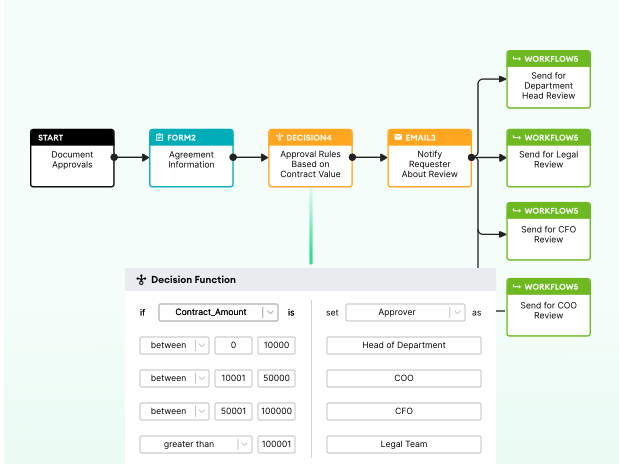
For example, a contract review request could be automatically:
- Categorized using AI-powered triage,
- Assigned to the correct lawyer based on region or contract value,
- Given a deadline based on internal SLAs,
- Escalated to a senior reviewer if not actioned within a set timeframe.
Whether it’s routing tasks, triggering workflows, or sending alerts, automation ensures legal work progresses efficiently and consistently.

3. Centralized Matter Information and Documents
Without a central system, legal teams often rely on project management tools, email threads, spreadsheets, shared drives, and more to manage their work. This fragmentation leads to missed information, duplicated effort, and a lack of visibility into what’s happening and why.
A successful legal matter workflow ensures all matter data is centralized in one place:
- Request details: intake information, business context, risk factors
- Assigned tasks and deadlines: who’s doing what, by when
- Documents and versions: uploaded files, generated contracts, redlines
- Approval history: full audit trails for decisions and actions
- Status and progress: real-time view into open, completed, and pending matters

By consolidating all of this, legal teams gain a single source of truth for every matter – one that is searchable, structured, and accessible across the team. Business stakeholders also benefit, with clear visibility into request status and reduced need for legal follow-ups.
Modular corporate legal software like Checkbox brings this centralization to life with intelligent reporting, configurable boards, and structured matter views connected directly to your matter management system so you can manage legal work with clarity and control.
Benefits of Matter Workflow Automation
Implementing legal matter workflows help to improve how a legal team operates and delivers value to their business. By automating and standardizing legal task management, teams unlock measurable improvements across efficiency, visibility, and impact. Here are the key benefits:
Operational Efficiency
Automated routing, approvals, and reminders eliminate manual work, reducing time spent on repetitive tasks and minimizing delays. Legal teams can handle more matters (faster) without burning out or turning to hiring.
Visibility and Accountability
Centralized workflows provide real-time dashboards and audit trails, so legal leaders know what’s in progress, who’s responsible, and where bottlenecks exist. This makes it easier to allocate resources, forecast demand, and report on performance.
Strategic Value
With structured data on volume, type, and turnaround of matters, teams can demonstrate their value to leadership and justify investment in legal ops initiatives.
Improved Business Experience
In-house legal self-service tools and faster turnaround times create a more responsive, collaborative experience for business users. Instead of emailing legal and waiting days for a response, users can initiate requests and track progress within a guided, predictable process.
Scalability
As the business grows, so does the legal workload. A well-designed legal matter workflow enables teams to scale support without scaling chaos, ensuring that growth doesn’t outpace legal’s ability to keep up.
Key Takeaways
A well-structured legal matter workflow is more than just a way to organize tasks. It’s a catalyst for transforming legal operations. By standardizing processes, automating manual work, and centralizing information, legal teams can drive efficiency, improve visibility, and scale their impact across the business.
Here’s what to remember:
- A legal matter workflow provides consistency from intake to resolution.
- Standardization reduces risk, improves turnaround times, and ensures repeatability.
- Automation streamlines assignments, deadlines, and approvals without manual overhead.
- Centralization gives the legal team and the business a single source of truth for all matters.
- Platforms like Checkbox enable this transformation with no-code tools, AI-powered triage, and intuitive dashboards.
Want to see it in action? Book a demo today to discover how Checkbox helps legal teams streamline matter management from end to end.