
Legal case management software is a system designed to centralize, track, and manage all legal matters in one place. Instead of handling requests across email, spreadsheets, shared drives, and direct messaging tools, legal teams use a single platform to capture intake, assign work, store documents, and monitor progress.
At the core of this system is the legal case management software workflow. This refers to the structured path a matter follows from intake to resolution.
A well-designed legal case management workflow defines:
- Who is responsible for each step,
- What approvals are required,
- How deadlines are tracked, and
- How outcomes are recorded.
It eliminates ambiguity, reduces manual handoffs, and ensures every request is handled consistently so legal can operate with efficiency, control, and measurable impact.
What a Legal Case Management Workflow Covers
A legal case management workflow defines how every matter moves through the legal team. It creates a structured, repeatable process so work is handled consistently, regardless of complexity or volume.
Importantly, a legal case management workflow extends beyond litigation. For in-house legal teams, it typically covers:
- Contract review and approval
- Compliance and regulatory matters
- Employment and HR-related issues
- Intellectual property (IP) requests
- Privacy and data incidents
- Marketing and procurement reviews
- General legal advice and advisory support
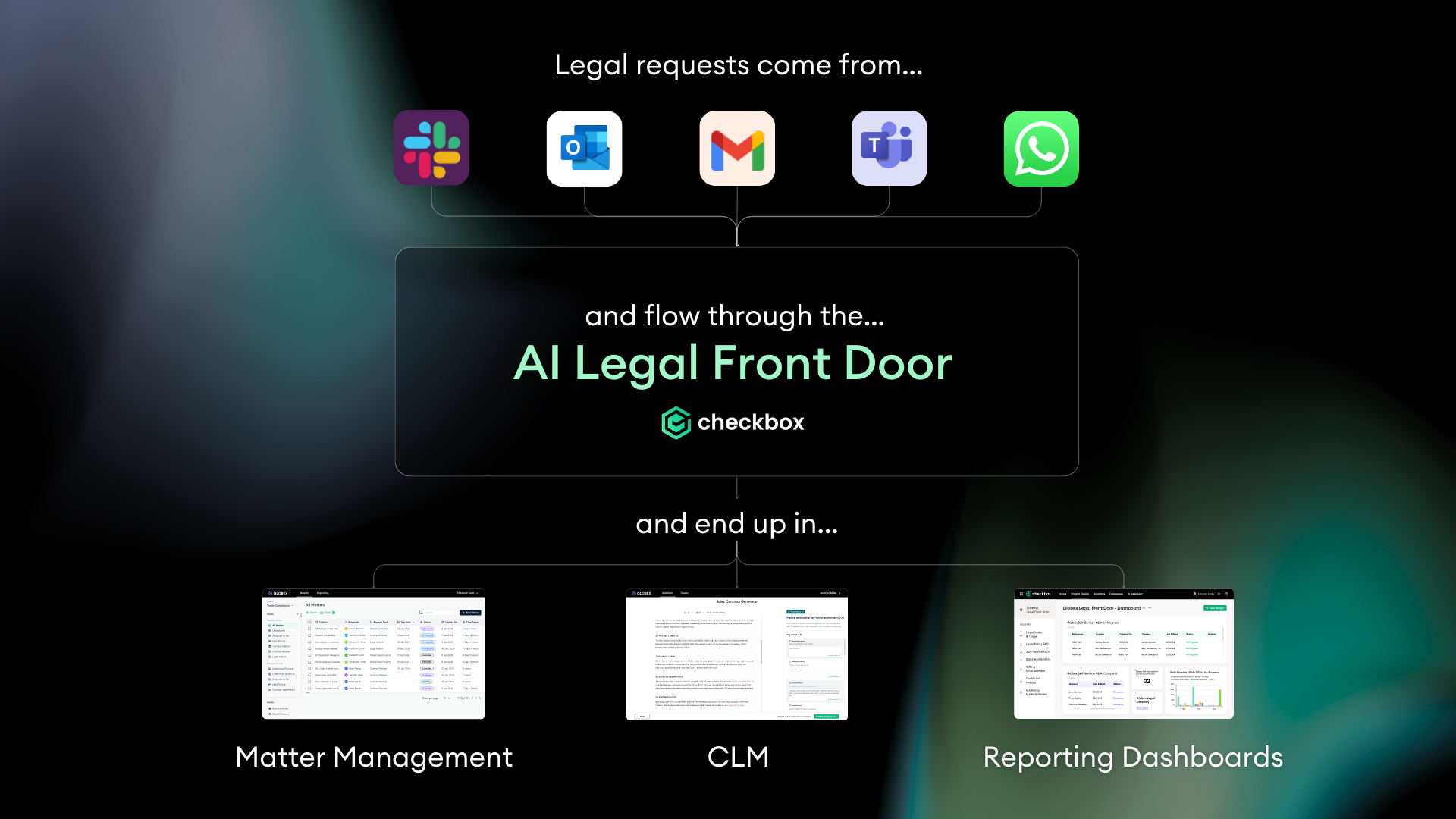
Across various matter types, the workflow usually includes several core stages:
1. Intake and Data Capture
Standardized forms collect the right information upfront, reducing back-and-forth and ensuring matters start with complete context.
2. Triage and Prioritization
Requests are categorized by type, risk level, or business impact, and routed accordingly.
3. Assignment and Collaboration
Matters are assigned to the appropriate legal team member, with clear ownership and defined next steps.
4. Approvals and Documentation
Required stakeholders are looped in through structured approval paths, and all related documents and communications are logged.
5. Resolution and Reporting
Once complete, the matter is closed with a clear audit trail, and data is captured for reporting and performance tracking.
By standardizing each of these stages, a legal case management workflow eliminates ambiguity. Instead of reinventing the process for every request, legal teams rely on one consistent operational framework that improves efficiency, strengthens compliance, and makes workload manageable at scale.
Centralizing Case Information and Documents
One of the biggest challenges in legal operations is fragmentation. For example, requests come in through email, Slack, and meetings, documents are stored across shared drives, personal folders, and contract repositories, and tracking is done via spreadsheets (if they’re even tracked at all). A modern legal case management software workflow eliminates this fragmentation by creating a single source of truth for every matter.
At the center of the workflow is a structured matter record that includes:
- Standardized intake data
- Assigned owner and stakeholders
- Key dates and deadlines
- Supporting documents and versions
- Communication history
- Approval logs and audit trails
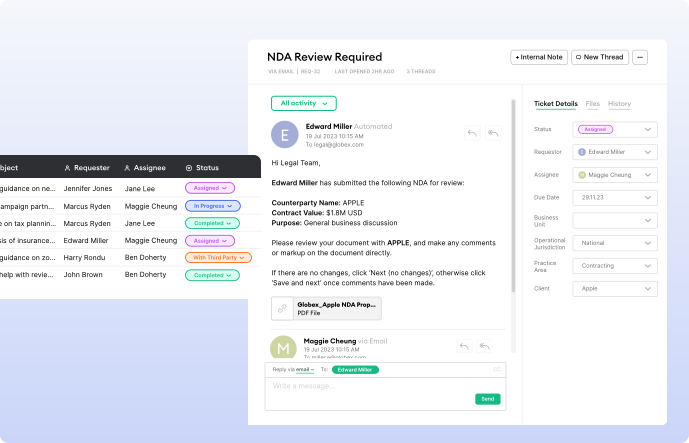
Instead of chasing information across systems, legal teams can see everything related to a case in one place. This not only reduces administrative overhead, but also minimizes risk. Complete records strengthen defensibility, improve compliance readiness, and ensure nothing falls through the cracks.
For General Counsel and Legal Ops leaders, centralization also unlocks visibility. When all matters are captured within the legal case management workflow, leadership gains a clear view of volume, complexity, and resource allocation, turning scattered legal work into structured, measurable operations.
Automating Task Assignment and Deadlines
Even with centralized information, legal teams can still struggle if work is assigned and tracked manually. Without case management workflow automation, even a well-documented legal case management workflow can slow down under great volume.
A modern legal case management software workflow automatically routes matters based on predefined rules, such as matter type, contract value, risk level, or business unit. Instead of relying on someone to manually triage requests, the system directs each case to the right person or approval path from the start.
Key automation capabilities often include:
- Auto-assignment based on expertise, capacity, or matter category
- Conditional approval paths for high-risk or high-value matters
- Service level tracking (SLAs) to enforce turnaround expectations
- Automated reminders and escalations to prevent bottlenecks
For example, a low-risk NDA might be fast-tracked or handled through a streamlined review path, while a high-risk regulatory issue automatically escalates to senior counsel. The workflow ensures consistency without requiring constant manual oversight.
This results in clear accountability, fewer delays, and more predictable cycle times. Instead of spending time coordinating work, legal teams can focus on delivering strategic advice while the legal case management workflow handles the operational heavy lifting in the background.
Tracking Case Progress From Start to Resolution
Without clear tracking, stakeholders don’t know the status of their requests, legal leaders lack visibility into team workload, and bottlenecks go unnoticed until after mistakes are made. A well-designed legal case management workflow solves this by providing real-time visibility into every stage of a matter’s lifecycle.
From intake to final resolution, teams can track:
- Current status (e.g., in review, awaiting approval, completed)
- Assigned owner and contributors
- Time in each stage of the workflow
- Overall cycle time
- Workload distribution across the team
.svg)
This level of transparency benefits both legal and the broader business as requesters gain clarity on progress without chasing updates, and legal teams can identify delays early and rebalance workloads as needed. So, instead of reacting to complaints about being slow to complete work, legal can proactively manage performance with measurable data.
Benefits of a Streamlined Case Management Workflow
When every matter follows a structured, automated path, the impact extends far beyond operational organization. A mature legal case management workflow directly improves efficiency, reduces risk, and strengthens legal’s strategic position within the business.
Operational Efficiency
Standardized workflows eliminate repetitive administrative work and reduce unnecessary back-and-forth. Automated routing, structured intake, and deadline tracking shorten cycle times and create more predictable outcomes. Legal teams spend less time coordinating work and more time delivering substantive legal advice.
Risk Mitigation
Consistency is one of the most powerful risk controls. A defined legal case management software workflow ensures approvals happen in the correct order, required documentation is captured, and audit trails are preserved. This reduces compliance gaps, prevents unauthorized commitments, and strengthens defensibility during investigations or audits.
Scalability Without Headcount Growth
As companies grow, legal request volume increases. Without workflow automation, that growth translates directly into headcount pressure. A streamlined legal case management workflow absorbs volume through automation, structured processes, and self-service for repeatable matters, allowing legal to scale its impact without scaling costs at the same rate.
Demonstrable Legal Value
Perhaps most importantly, structured workflows generate data. Legal leaders gain clear metrics on workload, turnaround times, and matter complexity. This makes it easier to communicate impact to the CFO and board, justify investment in technology or talent, and position legal as a proactive business partner rather than a reactive cost center.
Key Takeaways
A legal case management workflow defines how legal work gets done. From intake to resolution, it creates a structured path that ensures every request is handled consistently, efficiently, and with full visibility.
| Capability | What It Means | Business Impact |
|---|---|---|
| Centralized Matter Management | All matters, documents, and communications live in one system. | Creates a single source of truth and reduces risk from fragmented information. |
| Automated Routing & Approvals | Matters are auto-assigned and follow predefined approval paths. | Faster turnaround times with clear accountability. |
| Deadline & SLA Tracking | Automated reminders and escalation rules prevent bottlenecks. | Predictable cycle times and fewer missed deadlines. |
| Real-Time Visibility | Dashboards show status, workload distribution, and progress. | Improved resource allocation and leadership transparency. |
| Performance Reporting | Volume, complexity, and cycle time data are captured automatically. | Enables strategic decision-making and demonstrates legal’s business value. |
For modern in-house teams, workflow maturity directly impacts scalability and influence. When legal work is standardized and measurable, teams can handle higher volumes without chaos, reduce risk through consistent processes, and clearly demonstrate their value to the broader business.
In today’s environment, a streamlined legal case management workflow forms the operational foundation that enables legal to move faster, operate with confidence, and scale alongside the business.
Want to learn more about legal case management software workflows and how a legal front door can help your team scale up? Book a demo with one of our technology consultants today.