

Over the last decade, in-house legal teams have undergone a fundamental shift. Legal teams are being pulled into more conversations, earlier in the process, and across more parts of the business. At the same time, budgets remain tight, headcount is constrained, and expectations around speed, visibility, and accountability continue to rise. In this environment, the difference between legal teams that are thriving and those that are stretched thin comes down to the tools they rely on and how intentionally those tools are combined.
The most effective legal functions in 2026 are not built on a single, monolithic system or a collection of disconnected point solutions. They are powered by modular legal technology: tools that are flexible by design, easy to configure, and built to work together.
When these tools are connected, the impact compounds and legal teams regain the time and clarity needed to focus on higher-value work.
So, let’s discuss what core, modular tools belong in every GC’s toolkit in order to run efficient, resilient, and smoothly operating legal processes in the year ahead.
- AI Legal Front Door
- No-Code Legal Workflow Builder
- Matter Management System
- Document Automation or CLM-Lite Tool
- Redlining and AI Contract Review Tool
- AI Legal Assistant
- Legal Reporting and Analytics Dashboard
1. AI Legal Front Door

In 2026, every effective legal operation starts with a single, well-designed entry point for legal requests. The AI legal front door is the tool that captures how the business engages with legal and determines whether the rest of the tech stack works smoothly or breaks under pressure.
Without a front door, legal demand arrives through emails, direct messages, verbal conversations, and half-complete forms. When operating in this manner, requests typically lack context, priority is unclear, and work is triaged manually. Over time, this creates invisible backlogs, inconsistent outcomes, and unnecessary frustration for both legal and the business.
An AI legal front door replaces that chaos with structure by giving the business one clear place to go for legal support. It uses natural language intake and AI-driven triage to understand what’s being asked, assess risk, and route the request to the right path (self-service or lawyer).
The AI legal front door is designed to plug directly into legal workflows, matter management, document automation, and reporting. It ensures that every request enters the system cleanly, with the right data captured from the start, so nothing needs to be re-entered, chased down, or reconstructed later.
2. No-Code Legal Workflow Builder

Once legal demand is captured through an AI legal front door, the next question becomes simple: what happens next? In 2026, the answer should never be “it depends on who saw the email.” This is where a no-code legal workflow builder becomes essential.
A legal workflow builder is the tool that turns legal processes into repeatable, reliable systems. Instead of relying on tribal knowledge or manual coordination, legal teams use automated workflows to define how work moves from intake to resolution. Approvals, escalations, parallel reviews, deadlines, and handoffs are all built into the process upfront.
Most corporate legal teams cannot afford to wait on IT or external consultants every time a process changes. The no-code element allows legal teams to manage adjustments themselves as regulatory requirements continuously shift, business priorities evolve, and new use cases are always emerging. A no-code workflow builder allows legal operations teams to adapt quickly, updating logic, rules, and routing without breaking the system or creating new silos.
3. Matter and Legal Work Management System
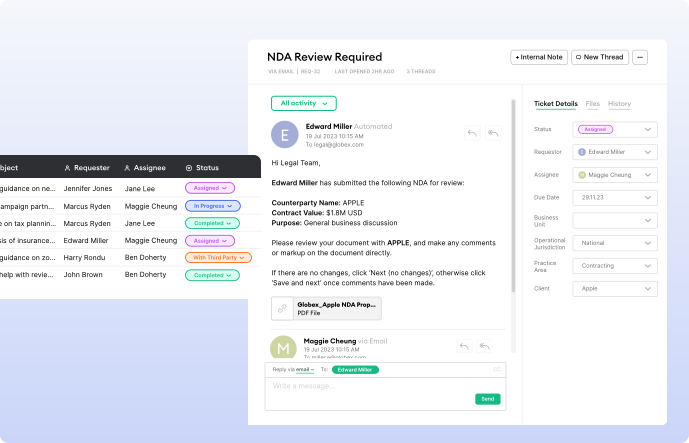
As legal teams scale in 2026, the biggest risk is invisible work. Without a dedicated matter management software, legal leaders lose sight of what the team is actually doing, where time is going, and which requests are consuming the most effort.
A matter management tool for corporate legal departments provides a single, structured view of all legal work, regardless of whether it’s contract-related or not. Every request that flows through intake and workflows becomes a trackable matter, complete with ownership, status, priority, and context. This replaces spreadsheets, inboxes, and ad hoc tracking with a system designed specifically for how legal teams operate.
What sets this tool apart in a modular stack is its ability to stay connected. Matters are not static records created after the fact. They are living objects that update automatically as workflows progress, documents are generated, approvals are completed, and deadlines approach. So, having a matter management system connected directly to the other tools in your legal tech stack helps to create real-time visibility for both legal teams and leadership without requiring lawyers to manually update systems.
4. Document Automation or CLM-Lite Tool
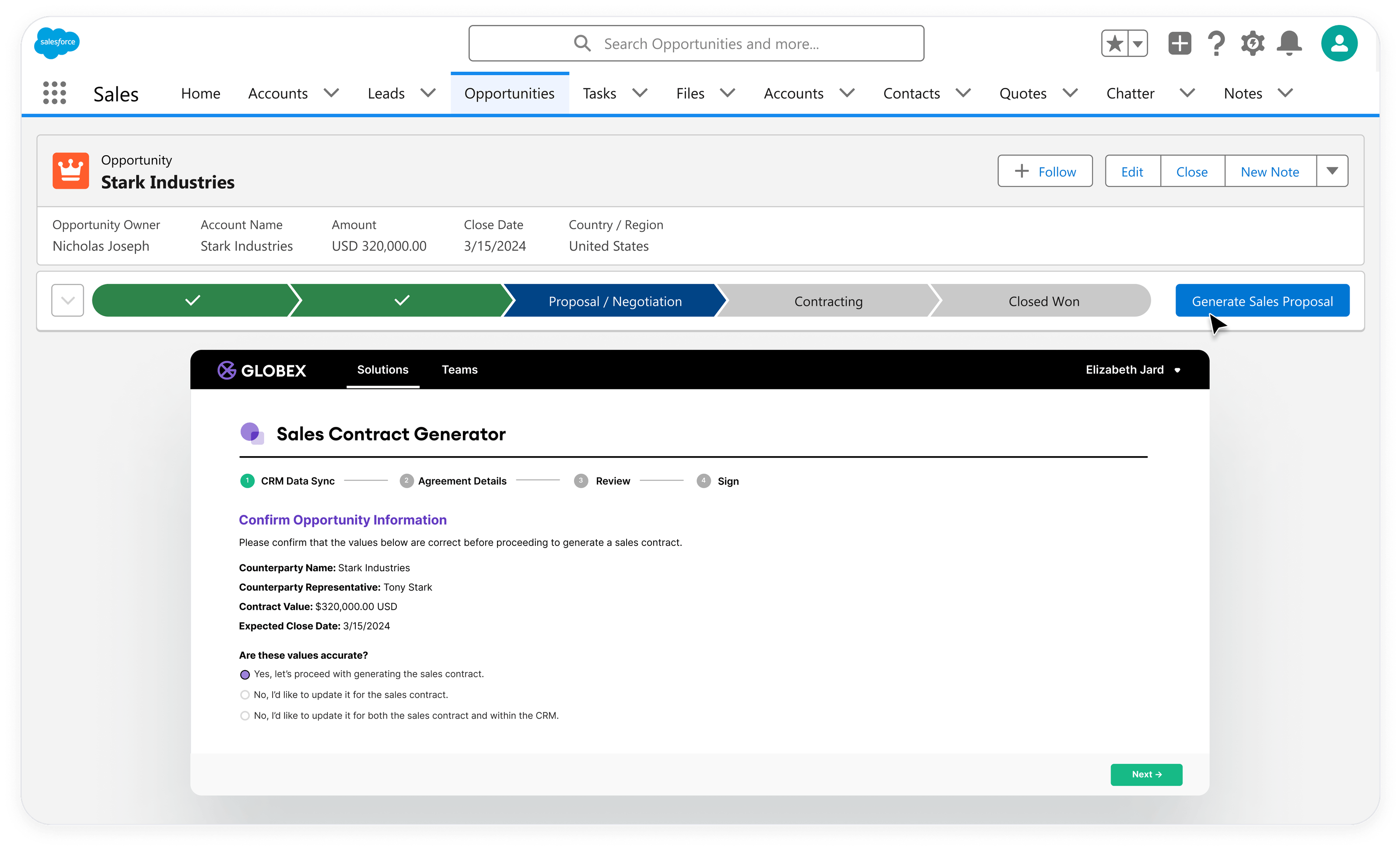
By 2026, most legal teams have learned the hard way that traditional CLM platforms are often too rigid, too heavy, or too disconnected from how legal work actually happens. At the same time, contracts remain one of the highest-volume and highest-impact categories of legal work. This is where document automation and CLM-lite tools earn their place in the modern toolkit.
A CLM-lite approach focuses on what legal teams actually need to execute contracts efficiently: generating documents from approved templates, routing them through the right approvals, managing negotiation, and executing them without friction. Instead of forcing contracts into a standalone system, this tool embeds contracting directly into legal workflows.
The strength of this approach lies in flexibility. High-volume, standardized agreements like NDAs, order forms, and simple vendor contracts can be fully automated with guardrails. More complex agreements can still move through structured workflows, while preserving legal judgment and review where it matters. The same tooling supports both, without splitting contract work into a separate silo.
In practice, a CLM-lite reduces cycle times, improves consistency, and lowers the operational burden on legal teams. More importantly, it allows legal to support the business at speed without taking on the cost and complexity of a full-scale CLM implementation.
5. Redlining and AI Contract Review Tool
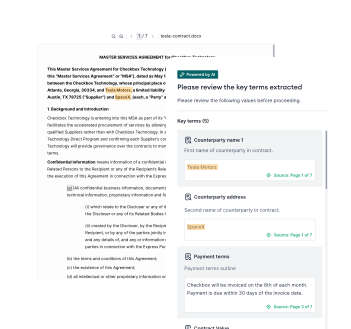
A redlining and AI contract review tool has become a core component of the modern GC’s toolkit as it supports lawyers during negotiation by analyzing incoming contracts, flagging deviations from standard positions, and suggesting edits based on pre-approved playbooks. Instead of starting from a blank slate or manually scanning every clause, legal teams are guided to the provisions that matter most.
What makes this tool effective is how it fits into the broader system. It doesn’t replace legal review or operate as a standalone destination. It plugs directly into document workflows, allowing lawyers to review, redline, and negotiate contracts within the same process used for intake, approvals, and execution. The contract stays connected to the matter, the workflow, and the data layer at every step.
In a modular stack, this means low-risk agreements move faster with confidence, and higher-risk agreements receive focused attention where judgment is required. For example, by collectively using tools like Checkbox and Ivo, legal teams can spend less time on mechanical review and more time on strategic decision-making.
Over time, these tools also reinforce consistency. Playbook positions are applied evenly. Risk tolerance is embedded into the review process. Institutional knowledge is captured and reused instead of living only in individual inboxes.
6. AI Legal Assistant

By 2026, one of the clearest signals of a mature legal operation is how little of the team’s time is spent answering the same questions or redoing the same low-risk work. Business-facing legal self-service tools and AI legal chatbots are what make that possible.
A modern AI legal assistant is trained on internal legal knowledge such as policies, playbooks, approved workflows, and historical guidance. It answers questions in plain language, helps business users understand what legal support they need, and guides them to the right next step (i.e. solve with self-service or solve with a lawyer). For the business, this means faster answers and fewer dead ends. For legal teams, it means fewer interruptions and more consistent responses.
What separates this tool from generic AI is context and control. It doesn’t speculate, draft unchecked advice, or operate outside defined boundaries. It reinforces how legal already works, surfacing approved information and directing users into structured processes when judgment or review is required.
7. Legal Reporting and Analytics Dashboard
.svg)
Legal teams are increasingly expected to demonstrate impact, efficiency, and alignment with business priorities. Legal dashboard and analytics software is what makes that possible.
It gives GCs and legal operations leaders real-time visibility into how legal work is flowing through the organization. Workload by team member, request volume by type, turnaround times, bottlenecks, and trends over time are available on demand, grounded in live data.
What makes reporting powerful in a modular stack is where the data comes from. Instead of relying on lawyers to manually log activity, reporting pulls directly from intake, workflows, matter management, and data extraction. Every request, decision, and outcome contributes automatically to a clearer picture of legal operations.
For leadership, this changes the conversation as budget discussions become evidence-based, resourcing decisions are tied to actual demand, and conversations with the board move from towards “here’s where legal time is being spent and why it matters to the business.”
When analytics and key legal metrics are connected across the stack, legal leaders can identify inefficiencies early, adjust processes quickly, and continuously improve how legal support is delivered. Without this visibility, even the best-designed tools operate in isolation.
Key Takeaways
In 2026, the most effective legal teams are not defined by the size of their budgets or the number of tools they use, but by how intentionally their legal tech stack is designed. As legal demand continues to grow and expectations around speed, visibility, and accountability rise, success depends on having modular tools that work together as a system.
- An AI legal front door brings order to demand.
- Automated workflows create consistency.
- Matter management delivers visibility.
- CLM-lite and AI-powered review accelerate execution without sacrificing judgment.
- Embedded legal AI chatbots and real-time reporting ensure legal teams stay focused on higher-value work while leadership gains clarity into impact.
When these tools are connected, the benefits compound. Legal work becomes easier to manage, easier to measure, and easier to scale. For GCs, the opportunity in 2026 is not to buy more software, but to build a legal tech stack that is flexible, connected, and designed to evolve with the business. Done well, this toolkit creates the foundation for a more resilient, high-performing legal team in the years ahead.
Want to see how a modular legal tech stack comes together in practice? Schedule a call with one of our legal technology consultants today.