In-house legal teams are becoming increasingly recognized as a core part of how a business operates. And from managing commercial contracts to keeping the company on the right side of compliance, the scope of what legal is expected to own has grown significantly.
But the volume of work has grown faster than most teams can keep up with. Contract requests, approval workflows, policy reviews — a lot of it is high-frequency, process-driven work that sits somewhere between “needs a lawyer” and “doesn’t need a lawyer.” And that grey zone is exactly where things get slow.
AI-powered legal automation is helping in-house teams draw a clearer line. By automating the operational and repetitive parts of legal work, teams can move faster, reduce bottlenecks, and give their lawyers the space to focus on what actually requires legal expertise.
This post breaks down how it works, where it delivers the most value, and what to look for if your team is ready to explore it.
What Is AI-Powered Legal Automation?
AI-powered legal automation is about using specialized legal technology to handle the process-driven parts of legal work. This includes the tasks that follow a predictable pattern, require consistent application of rules, and involve moving information from one place to another.
That might look like a contract request form that automatically generates a first draft based on pre-approved templates. Or an approval workflow that routes an agreement to the right stakeholders without anyone having to manually figure out who needs to sign off. Or a compliance checklist that updates itself when regulatory requirements change.
What separates AI-powered legal automation from older legal tech is the intelligence layer. It’s not just about digitizing a paper process — it’s about the system being able to interpret context, flag exceptions, and make smarter decisions about how work gets handled.
For in-house legal teams specifically, this is not about deploying complex AI models, but rather building workflows that reflect how your team actually operates and then letting the technology run them consistently, at scale, without the usual back-and-forth. It’s helpful to think of it as a very well-organised, always-on system that keeps legal work moving.
The In-House Legal Team’s Biggest Time Drains
Ask any corporate legal professional where the hours go, and you’ll hear a familiar list:
- Contract requests that arrive with no context, no priority, and no standard format — each one requiring a back-and-forth just to understand what’s actually being asked.
- Approval processes that stall because the right person wasn’t looped in early enough, or because no one could track down the latest version of the document.
- Compliance obligations that live in a spreadsheet somewhere, updated manually, and inevitably falling behind.
- Internal triage that requires a lawyer to read the request, assess it, and figure out where it goes.
None of these tasks are complex in isolation. But they’re frequent, they’re interrupting, and they pull focus away from the work that actually requires legal expertise — the negotiations, the risk assessments, the strategic advice that the business genuinely needs from its legal team.
Most of these bottlenecks reflect a process problem. And that’s exactly what AI-powered legal automation is designed to fix.
How AI-Powered Legal Automation Solves These Problems
The good news is that the time drains outlined above are fixable. Here’s where AI-powered legal automation makes the most tangible difference for in-house teams:
Legal Intake & Triage
Instead of hundreds of requests landing in a shared inbox with no structure, AI legal automation can funnel all incoming legal work from various channels (i.e. email, Slack, Microsoft Teams, Salesforce, etc.) through one legal front door, understand the nature of each request, and route them appropriately — whether that means auto-resolving them with a self-service answer, generating a draft document, or escalating to a lawyer when expertise is needed. Legal gets clarity from the start, and the business gets a faster, more consistent experience.

Contract Drafting
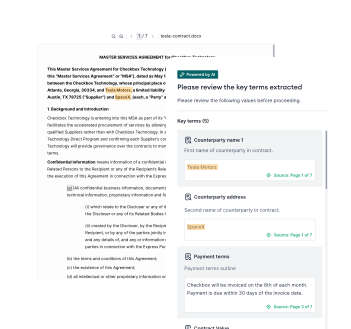
For high-volume, routine contracts such as NDAs, MSAs, and service agreements, AI-powered legal automation can generate a first draft instantly using pre-approved templates and internal playbooks, and offer AI-powered term extraction for faster redlining and revisions. Legal sets the guardrails, and the system works within them. Less drafting from scratch, fewer rounds of review.
Approval Workflows
Rather than manually figuring out who needs to sign off on what, automated workflows route contracts and documents to the right stakeholders based on predefined rules (i.e. contract value, agreement type, risk level). Nothing slips through the cracks, and there’s a clear audit trail throughout.

Compliance Tracking
Instead of maintaining a manual spreadsheet of obligations and deadlines, AI legal automation tools can monitor key dates, flag upcoming requirements, and keep the right people informed without anyone having to remember to check.

Taken together, these represent a fundamental shift in how in-house legal teams operate — from reactive and process-heavy, to structured, scalable, and proactive.
Benefits of AI-Powered Legal Automation for Legal Teams
When the operational layer of legal work runs smoothly, the impact is felt across the whole team (and beyond it). Here are some main ways AI-powered legal automation translates into day-to-day wins:
Legal AI Automation Comparison
| Challenge | Without Legal AI Automation | With Legal AI Automation |
|---|---|---|
| Contract Turnaround | Slow, dependent on lawyer availability | Faster, routine contracts handled in minutes |
| Process Consistency | Varies by person and workload | Standardized workflows enforced every time |
| Workload Visibility | Requests buried in inboxes and spreadsheets | Clear dashboards showing intake, progress, and bottlenecks |
| Lawyer Bandwidth | Tied up in admin and routine drafting | Free to focus on complex, high-value work |
| Business Relationships | Legal seen as a bottleneck | Legal seen as a responsive, strategic partner |
For legal ops managers specifically, the visibility piece is worth calling out. When work moves through structured workflows, you can see what’s coming in, what’s in progress, and where things are getting stuck. That kind of data is hard to come by in a traditional legal team and it’s increasingly important for making the case for resources, headcount, or investment in new tooling.
What to Look for in an AI Legal Automation Tool
Not all legal automation tools are built with in-house teams in mind. Some are designed for large law firms, others require heavy IT involvement to set up and maintain. If you’re evaluating options, here are the things worth paying closest attention to:
Built for Legal, Not IT
The best tools let legal teams build and manage their own workflows without needing to involve a developer every time something needs to change. Look for no-code or low-code configuration that puts legal ops in the driver’s seat.
Flexible Enough to Reflect How Your Team Works
Every in-house legal function operates differently. A good AI-powered automation tool should adapt to your processes, not force you to redesign them around the software. If the demo looks nothing like your day-to-day, that’s worth probing.
Integrates with Your Existing Tech Stack
Legal doesn’t operate in isolation. Look for tools that connect with the platforms your business already uses — whether that’s Salesforce, Slack, Microsoft Teams, email, or your e-signature provider. Automation that creates silos defeats the purpose.
Secure and Enterprise-Ready
Legal work is sensitive. Any tool you bring in should meet the security and data privacy standards your organization requires, and ideally come with a clear answer on where your data is stored and how it’s protected.
Supported by a Team that Understands Legal
Implementation support matters. A vendor that understands the specific challenges of in-house legal teams will get you to value faster than one treating you like any other software customer.
Key Takeaways
AI-powered legal automation won’t solve every challenge your team faces. But it does address something fundamental: the gap between the volume of work coming in and the capacity your team has to handle it. When intake is structured, routine work is automated, and workflows run without manual intervention, that gap starts to close.
Checkbox helps in-house legal teams automate the operational side of legal work, from intake to approval, without the complexity of a traditional software rollout. If you’re exploring what that could look like for your team, book a demo and see it in action.
Frequently Asked Questions
What is AI-powered legal automation?
AI-powered legal automation uses artificial intelligence (AI) to handle the process-driven, repetitive parts of legal work such as contract drafting, intake triage, approval workflows, and compliance tracking. It allows in-house legal teams to operate faster and more consistently, without increasing headcount.
How does AI legal automation benefit in-house legal teams?
In-house legal teams benefit from faster contract turnaround, standardized workflows, reduced admin burden, and better visibility over workload. It frees lawyers from routine tasks so they can focus on higher-value, strategic work.
Will AI-powered legal automation replace lawyers?
No, AI legal automation handles tasks that don’t require legal judgment like routing requests, generating standard contracts, and tracking deadlines. Lawyers remain essential for complex negotiations, risk assessments, and strategic advice.
What types of legal tasks can be automated with AI?
Common tasks include legal intake and triage, NDA and contract drafting, approval workflow management, compliance obligation tracking, and self-service legal request resolution for the wider business.
How do I choose the right AI legal automation tool for my team?
Look for a tool that is no-code or low-code, flexible enough to reflect your team’s existing processes, integrates with your current tech stack, meets enterprise security standards, and is backed by a vendor that understands in-house legal operations.
How long does it take to implement AI-powered legal automation?
Implementation timelines vary, but modern legal AI automation tools are designed to get in-house teams up and running quickly, often within weeks. Especially when the vendor provides dedicated onboarding support.