
When legal teams start exploring new technology, the conversation often begins with a contract lifecycle management (CLM) system.
It makes sense as contracts are visible, measurable, and frequently associated with revenue. If contract turnaround is slow, the natural assumption is to implement a CLM to solve the workload problem.
But for most in-house teams, contracts are not the root cause of operational strain.
The real challenge often turns out to be the flood of requests being thrown at legal from across the business. Contract reviews, yes, but also marketing approvals, privacy questions, procurement support, HR issues, compliance disclosures, and countless “quick questions” that arrive via email, Slack, and face-to-face meetings. Without a structured way to capture and triage that demand, work gets buried in inboxes, priorities shift constantly, visibility is limited, and reporting is nearly impossible.
A traditional CLM system optimizes what happens after a contract request is already defined. But it does not fix how work enters legal in the first place.
That is why many teams are rethinking their starting point.
Instead of jumping straight into a full-scale CLM implementation, some are taking a smarter first step: a CLM-lite approach focused on legal intake and request management. By establishing a centralized legal front door, standardizing intake, and automating triage, legal teams gain control over 100% of their workload… not just contracts.
Why Legal Teams Look at CLM-Lite Software
The interest in CLM-lite solutions reflects real pressure inside modern legal teams.
Request volumes are increasing across the board with contract reviews, vendor agreements, NDAs, marketing approvals, privacy assessments, and internal policy questions all competing for attention. At the same time, budgets are flat, headcount is limited, and expectations from leadership continue to rise.
In that environment, CLM-lite software feels like a pragmatic step forward.
For many teams, the initial goal is to standardize contract intake, automate high-volume agreements like NDAs, and introduce structured approval workflows. A CLM-lite offers a less costly, less complex, and faster to implement solution than a full enterprise CLM. It promises efficiency without the operational disruption of a large-scale system overhaul.
There is also a practical reality at play. Some teams explore full CLM platforms only to find that the cost, configuration effort, and change management requirements outweigh their actual needs. A CLM-lite approach, focused on workflow and document automation, feels more attainable (and in many cases, it is).
.svg)
The Limits of Traditional CLMs for In-House Teams
Traditional CLMs are powerful tools. They streamline drafting, negotiation, approvals, execution, renewals, and repository management. For contract-heavy teams, they are essential.
However, they are not designed to solve the entire legal operations challenge.
Most in-house legal teams handle far more than contracts. They manage:
- Compliance workflows,
- Regulatory disclosures,
- Privacy incidents,
- Procurement support,
- Marketing reviews,
- Employment issues,
- Board matters,
- Investigations, and
- A steady stream of internal advisory requests.
CLM software, by design, focuses on one slice of that workload: the contract lifecycle.
This creates a common disconnect.
Legal invests in a CLM, optimizes contract workflows, and still finds itself overwhelmed. Why? Because intake remains fragmented. Requests still arrive through email, Slack, and informal channels.
So, while the downstream process may be optimized, the front door is still wide open.
There is also a visibility gap. Leadership wants to understand total legal demand, workload allocation, cycle times, and resource constraints. And sure, a CLM can report on contracts, but it cannot provide a complete picture of all legal work unless every request (contract or not) is captured in a structured way.
How a CLM-Lite Solves the Real Pain Point
If the bottleneck is how work enters legal, the solution starts there with a CLM-lite that targets legal intake and request management.
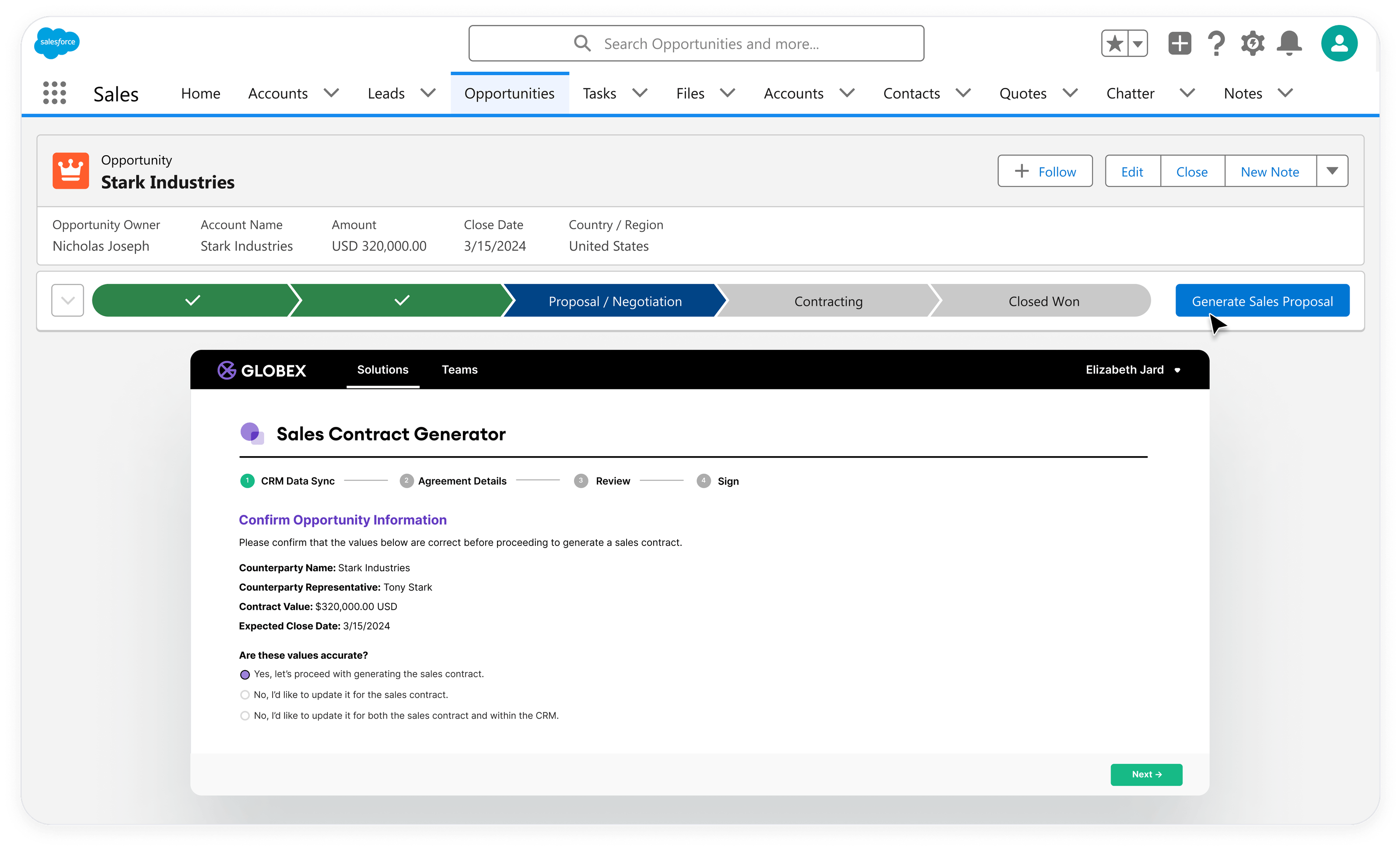
A CLM-lite can be integated with everyday business tools such as Salesforce, Slack, Microsoft Teams, and email, and helps capture requests through standardized forms with structured data from the outset. It also helps to automatically triage those requests based on factors such as type, risk level, or business unit.
Higher-risk requests can be escalated to the appropriate lawyer with full context attached, and approvals, reminders, and notifications happen systematically rather than manually.
Benefits of a CLM-Lite
1. Creates Visibility
Every request, not just contracts, is captured and tracked. Legal leaders can see volume by category, average turnaround times, workload distribution, and emerging risk areas. Reporting moves from anecdotal to data-driven.
2. Protects Lawyer Bandwidth
High-volume, repetitive work can be automated or standardized. Lawyers focus on strategic issues instead of acting as traffic controllers.
3. Improves the Business Experience
Requesters from various units across the business always know where to go. They receive clearer guidance, faster responses, and more consistent outcomes. Legal becomes easier to work with, without having to sacrifice control.
In short, improved intake and request management, delivered through a CLM-lite, optimize the system as a whole. They do not just improve one workflow. They create the operational foundation that allows every legal process, including contracts, to run more effectively.
When to Move from CLM-Lite into Full CLM
You are likely ready for a full CLM when contract negotiation becomes highly complex, when obligation tracking and renewals carry significant financial or compliance risk, or when you need a centralized contract repository with advanced search and reporting capabilities. At that stage, deeper functionality around redlining, clause libraries, and lifecycle analytics becomes critical.
But sequencing matters.
If intake is fragmented and visibility is limited, implementing CLM first can feel like building a sophisticated engine without fixing the roads that lead to it. The underlying operational strain remains.
A more strategic path for many teams looks like this:
- Establish a centralized intake and triage system.
- Capture data across all legal work.
- Standardize and automate repeatable processes.
- Use real workload data to determine where deeper CLM functionality will generate the most impact.
Key Takeaways
For many in-house teams, a CLM-lite approach focused on intake and request management delivers faster and broader impact. It creates visibility across all legal work, reduces administrative overhead, protects lawyer bandwidth, and improves the business experience. Most importantly, it lays the operational foundation needed to scale without simply adding headcount.
A full CLM may absolutely be part of the long-term roadmap. But sequencing it correctly can make the difference between incremental improvement and true operational transformation.
If your team is evaluating a CLM but still struggling with scattered requests, limited visibility, or manual triage, it may be wise to start with a CLM-lite.
Want to learn more? Book a demo to see how modern legal intake and workflow automation can help your team capture, manage, and report on every legal request.
Frequently Asked Questions
What is CLM-lite software, and why do some legal teams consider it?
CLM-lite software typically focuses on lightweight contract workflows such as intake, document generation, and approvals without the full complexity of enterprise CLM systems. Legal teams consider it as a faster, lower-cost way to standardize high-volume contracts and improve efficiency.
What are the main limitations of CLM for in-house legal teams?
A CLM primarily addresses contract workflows and does not solve broader legal operations challenges like fragmented intake and non-contract work. Without centralized request management, teams may still lack full visibility into total legal demand.
How does legal intake and request management address the real workload challenges?
Legal intake and request management centralize how all work enters legal, standardizing data capture and automating triage. This reduces manual back-and-forth, improves prioritization, and creates visibility across every type of legal request.
What are the benefits of starting with intake management instead of a CLM?
Starting with intake management optimizes 100% of legal work, not just contracts, delivering broader operational impact. It creates the foundation for reporting, resource allocation, and scalable workflows before layering in deeper contract functionality.
When should a legal team consider moving from intake into a full CLM system?
A team should consider full CLM when contract volume and complexity require advanced negotiation tools, obligation tracking, and repository management. At that stage, deeper lifecycle functionality provides meaningful strategic value.
How can intake and CLM tools work together as part of a legal tech roadmap?
Intake acts as the legal front door, capturing and triaging all requests before routing contract-related matters into a CLM system. Together, they create an end-to-end legal work management ecosystem with full visibility and control.