


Over the last decade, the role of in-house legal has shifted from the periphery of the business to the center. What was once viewed primarily as a function focused on risk, compliance, and protecting the business after the fact, is now being redefined. Today, legal is expected to lead, to enable, and to move in step with the pace of the business.
Increasingly, legal is asked to weigh in on strategic decisions from the outset, such as product development, vendor selection, marketing campaigns, ESG planning, and enterprise technology adoption. It’s a reflection of the world legal now operates in: one where regulation is more complex, risk is more cross-functional, and expectations from the business are rising fast.
This evolution has naturally changed what’s required of in-house legal talent. Deep legal expertise remains essential, but it’s no longer the only requirement. What distinguishes the most impactful legal professionals today is their ability to connect legal thinking with business priorities, to operate with systems in mind, and to adopt technology as a core part of their toolkit.
Modern legal teams need people who can adapt, collaborate, and build for scale. They need talent that’s fluent in the language of the business, comfortable with change, and empowered by tools that make complexity manageable.
Why Traditional Legal Skillsets Don’t Satisfy Modern Operational Demands
For years, legal hiring followed a familiar formula. Technical skill, years of experience, and subject matter expertise were the main criteria. These qualities still matter, but in isolation, they no longer meet the needs of a legal function operating at the pace and complexity of today’s business environment.
Modern legal teams are being asked to handle higher volumes of work, provide faster turnaround, and contribute meaningfully to cross-functional priorities, all while staying lean. The pressure to deliver has never been greater, and the gap between expectation and capacity is widening.
This is where the limitations of traditional hiring models become clear. Teams built only for legal depth often lack the operational agility to scale. They risk becoming bottlenecks because the structure isn’t built for speed, flexibility, or collaboration.
What’s needed now are legal professionals who can think beyond the brief. Individuals who bring process thinking, systems awareness, and a willingness to engage with technology. Not necessarily developers, but those who are comfortable using advanced, no-code tools to manage workflows, automate routine tasks, and deliver legal services at scale.
| Traditional Focus | Modern Focus |
|---|---|
| Legal credentials | Legal credentials plus operational mindset |
| Subject matter expertise | Business-aligned, commercially aware thinking |
| Years of PQE | Demonstrated adaptability and growth potential |
| Reactive issue handling | Proactive risk spotting and opportunity framing |
5 Key Traits of Modern In-House Legal Talent
As legal becomes more embedded across the business, the makeup of in-house teams must evolve accordingly. The most effective legal professionals today combine their legal training with a broader set of competencies. These are the traits increasingly sought after by forward-looking General Counsels (GCs) and Legal Ops leaders building teams that are not only excellent, but scalable.
1. Technologically Fluent
Today’s legal work happens within systems, whether that’s for intake, triage, document generation, or reporting. The ability to work within these platforms confidently is essential. Legal professionals don’t need to know how to code, but they do need to be comfortable using no-code tools to automate workflows, collaborate with stakeholders, and reduce manual effort. This fluency helps legal move faster, without compromising control.
2. Business-Oriented
Understanding legal risk is one thing, but translating that risk into business impact is another. The modern legal hire knows how to align advice with commercial objectives, navigate competing priorities, and contribute to decisions that move the business forward. This kind of thinking builds trust beyond the legal function and earns legal a seat at the strategy table.
3. Process-Driven
In high-growth environments, legal teams can’t scale on expertise alone. They need repeatable systems and structured processes. Professionals who understand workflow design, approval logic, and triage models are able to unlock time and reduce friction. This especially proves useful for routine tasks such as managing NDAs, reviewing vendor contracts, or handling compliance disclosures. Legal talent that thinks in processes makes the whole function more efficient.
4. Collaborative Across Functions
Legal rarely works in isolation anymore. From marketing and HR to procurement and product, legal input is now threaded through key business workflows. The best in-house legal professionals are those who can partner cross-functionally, adapt to context, and bring clarity to complexity.
5. Adaptive and Curious
Regulatory landscapes change, and so do tools, teams, and expectations. The modern legal environment rewards those who are open to change and eager to learn, whether it’s experimenting with legal AI, adopting new platforms, or rethinking how legal services are delivered. Curiosity (not just credentials) is what keeps legal teams resilient and forward-thinking.
Why This Matters for Hiring Today
The expectations placed on in-house legal teams are rising. However, while the scope of work expands, resources often do not. Most legal departments are expected to hold steady (or do more) with flat or shrinking budgets. This disconnect creates a growing risk of legal becoming a bottleneck to the business.
Related Resource: Check out our latest eBook on the top critical trends for in-house legal teams in 2026.
Hiring the right people is the first step in solving that challenge. Legal leaders must now look beyond traditional credentials and assess whether candidates can operate within a modern, tech-enabled legal environment. Can they navigate automated workflows? Collaborate effectively across departments? Think in terms of systems, not just cases?
At the same time, the tools legal teams adopt should support this kind of talent. With platforms like Checkbox, legal professionals don’t need technical backgrounds to design and deploy complex workflows. This shifts the dynamic as hiring can prioritize adaptability and business alignment over niche technical skills, knowing that the technology will meet people where they are.
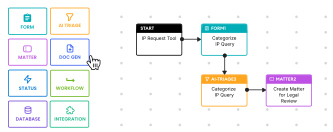
Ultimately, hiring decisions made today will determine whether legal becomes a strategic partner or remains a service function stretched thin. The teams that thrive will be those built for scale, equipped with the right tools, and staffed by people who understand both the legal and operational sides of the business.
Practical Tips for GCs & Legal Ops Leaders
Building a modern legal team is about finding the right mix of skills, mindset, and adaptability to thrive in a fast-moving, tech-enabled environment. For GCs and Legal Operations leaders, hiring strategically now sets the foundation for long-term scale and impact. Here are four practical considerations to guide the hiring process:
1. Hire for Mindset, Not Just Experience
Look beyond the resume. Prioritize candidates who demonstrate curiosity, adaptability, and a willingness to learn new systems. These traits often predict success in dynamic environments more reliably than years of technical legal experience alone.
2. Screen for Operational Thinking
Ask how candidates have approached process challenges in the past, whether it’s reducing review cycles, standardizing workflows, or improving how requests are tracked. Those with a process mindset will naturally look for ways to improve efficiency.
3. Prioritize Tech Comfort, Not Tech Expertise
Leading in-house legal tools like Checkbox are designed specifically for legal professionals. Candidates don’t need to code, but they should be confident working with no-code tools and open to using platforms that automate and streamline legal work.
4. Involve Legal Ops Early in the Hiring Process
Legal Operations can bring valuable perspective on the functional needs of the team and where new hires can drive the most impact. Their input helps align hiring with broader transformation goals.
The hiring decisions made today will shape how legal operates tomorrow. A team built with the future in mind — enabled by the right tools and driven by the right mindset — can meet growing demand without sacrificing speed, control, or team wellbeing.
Key Takeaways
Modern legal teams are navigating a period of significant change. Expectations are rising, demands are multiplying, and the pace of business shows no signs of slowing. But with the right people, the right mindset, and the right technology, legal has the opportunity to become a true enabler of business success.
Building the legal team of the future is ultimately about creating a function that operates with clarity, confidence, and purpose. A team that understands the business, embraces change, and is empowered to deliver value at every stage of the journey.
Legal technology plays a key role in making that vision real. For example, tools like Checkbox play a part of a broader shift in how legal work gets done. They allow lawyers to focus on what matters most, while automation and workflow design take care of the rest.
For legal leaders, the question is no longer whether change is coming. It’s how to prepare for it and who to bring along for the journey.
To explore what this could look like for your team, schedule a call with one of our technology consultants today. Together, we can help you build with clarity, and scale with confidence.


