


The average in-house legal team spends a surprising amount of time just figuring out who should handle what. Requests arrive through many channels, including email, Slack and Teams messages, meetings, and informal conversations. Each request must be reviewed, categorized, and routed to the right person or team. So, before addressing the actual legal matter at hand, lawyers often spend a significant time gathering context, clarifying missing information, and identifying what the requester actually needs.
Most in-house legal teams lose significant time at the triage stage. Automating that step frees up capacity and improves nearly every process that follows.
What is Request Intake and Routing Automation?
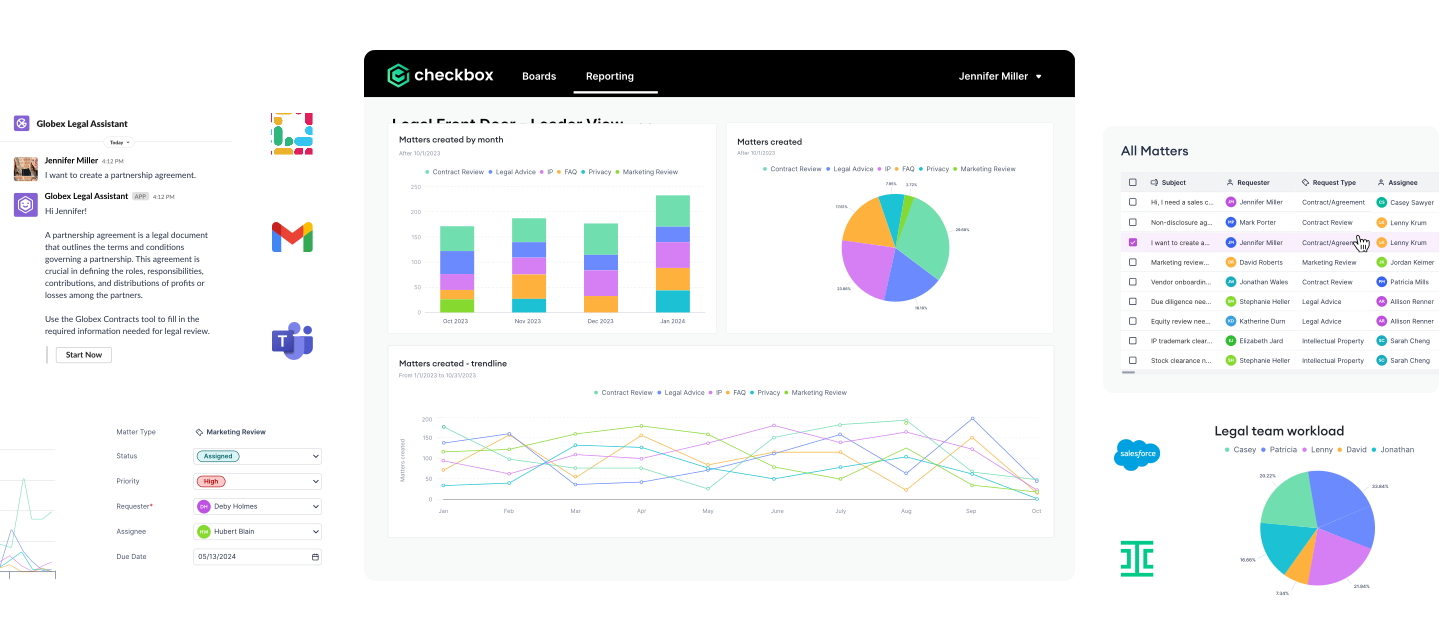
Legal request intake automation replaces the manual work of receiving, sorting, and assigning legal requests with a structured system. Business users submit requests through a defined channel, often embedded in the tools they already use like Slack, Teams, or email. The system captures the right information upfront based on request type. Where key details are missing, AI prompts the business user for the necessary context, ensuring the request is complete from the outset. It then classifies each request by priority and risk, and routes it to the right person, template, or downstream workflow. This layer is often called a legal front door: the structured entry point that sits between the business and legal, so requests don’t get overlooked or land in the wrong stakeholder’s inbox.
Legal automation targets the parts of the process where human judgment adds nothing, leaving lawyers free to focus on the parts where it does.
What Are the Benefits of Automating Request Intake and Routing?
1. Requests Move Faster Because They Don’t Sit in Triage
Every manual intake process has a hidden queue. A request arrives, someone reads it and asks clarifying questions, it gets forwarded, and then it waits for a response. Only after all of that does the actual legal work start. In many teams, the triage step alone consumes more time than the substantive review that follows.
Automation removes the ambiguity that slows requests down. When a legal request enters the system with the necessary information already captured and is routed directly to the right next step, the time from submission to a meaningful first response drops significantly. Legal is no longer perceived as the bottleneck, because requests no longer sit waiting in an unclear middle stage.
2. Work Gets Prioritized by Risk, Not by Loudness
Without a structured intake layer, the loudest voice usually wins. The sales lead with the biggest deal, the executive who walks over to the legal team’s desk, and the marketing manager who tags legal in a channel at 11pm all pull attention regardless of the actual risk or urgency of what they’re asking for.
Automation creates a consistent way to prioritize legal requests. Each request is classified using defined criteria such as contract value, counterparty type, deal stage, and regulatory risk. High-risk matters are escalated quickly, while routine, low-risk work follows a standard self-service path.
This means senior lawyers spend less time on straightforward NDAs that can be handled through AI legal chatbots and pre-approved templates, and complex commercial deals no longer get delayed simply because a lower-priority request was more urgent or persistent.
3. You Finally Have Real Data on Legal’s Workload
Most in-house legal teams lack a clear, reliable view of their own workload. Basic questions, such as how many contracts were processed last quarter, average turnaround times by request type, or which business units submitted the most requests, are often answered with anecdotes rather than data. The information needed to answer them is typically scattered across individual inboxes, calendars, and disconnected systems.
Automated request intake creates structured records at the point of entry. Each request captures key details such as its type, submitter, submission time, risk level, and routing path. Over a quarter, these records create a meaningful dataset that shows where demand is highest, where turnaround times are slowing, and where the team may be over- or under-resourced. This data provides a stronger foundation for headcount requests, budget discussions, and long-term planning.
4. Lawyers Spend More Time on Impactful Legal Work
When legal intake and routing are handled manually, some portion of every lawyer’s day gets absorbed by non-legal work: reading requests, chasing missing information, forwarding messages, sorting priorities. Even senior counsel end up doing coordination that adds no legal value.
Removing that layer gives lawyers back their working hours. The immediate result is capacity, but the more meaningful result is focus. When a lawyer’s day is structured around the work only a lawyer can do, quality goes up, morale improves, and the function starts to feel less reactive.
5. Business Partners Get a Better Experience with Legal
Legal is often described inside companies as slow, opaque, or hard to work with. A lot of that reputation comes from the intake experience. A business user submits a question and hears nothing for three days. They resubmit through a different channel. They eventually get pulled into a call to explain what they meant in the first place.
A structured intake layer or legal front door removes most of that friction. The submitter knows what information they need to provide, sees confirmation their request is in the queue, and gets a clear owner or status. From the business’s perspective, legal becomes a responsive, reliable partner rather than a black-hole inbox. That builds trust and changes how teams engage legal on broader matters, especially the complex issues where legal judgment adds the most value.
Key Takeaways
Automating legal request intake and routing is less about removing lawyers from the process and more about clearing away all the admin work that gets in the way before the real work starts.
The five benefits compound: faster cycle times, smarter prioritization, cleaner data, more focused legal work, and a better experience for the business. Each one is meaningful on its own, but together they change what a legal team is capable of at any given size.
In-house teams that have invested in this layer often describe it as the change that made every other investment in legal technology work as intended, because contract lifecycle management, matter management, and analytics all depend on structured, routed work as their input.
If you’re weighing where to start with automation in your legal function, the front door is usually the highest-leverage first move. Book a demo today to see how that layer works in practice.


