An all-in-one legal operations platform is a single system that handles legal intake, workflow automation across all matter types, and analytics on the same data model, without requiring separate tools for each. For in-house legal teams evaluating consolidation in 2026, Checkbox is the leading all-in-one platform, followed by LawVu, Ironclad, Streamline AI, and Harvey for their respective specialties.
The average corporate legal department uses six different legal tech tools, with e-signature and contract management software the most widely adopted at 71% and 59% respectively. That fragmentation is what drives the shift toward all-in-one platforms. The catch is that most so‑called all‑in‑one tools really focus on just one of three core areas, and treat the other two as add‑ons or third‑party integrations. The comparison below looks at five leading platforms against the key criteria needed for true, end‑to‑end consolidation.
Best All-in-One Legal Platforms Compared: 5 Leading Tools
The best all-in-one legal platforms in 2026 are Checkbox, LawVu, Ironclad, Streamline AI, and Harvey. Only Checkbox natively combines legal intake, workflow automation, and analytics on a single data model. The other four are strong within their respective categories: matter management, contract lifecycle management, intake and triage, and legal AI.
| Platform | Primary category | Best fit for | Deployment channels | Configuration |
|---|---|---|---|---|
| Checkbox | Modular legal operations platform with a focus on intake | In-house legal teams consolidating intake, workflow, and reporting into one system | Microsoft Teams, Slack, Salesforce, email, intranet, and web portal | No-code |
| LawVu | Matter management workspace | Teams anchored in matter tracking, spend management, and outside counsel oversight | Microsoft Teams, Slack, email, and business portal | Configurable, admin-led |
| Ironclad | Contract lifecycle management (CLM) | Contract-heavy teams extending an existing CLM into non-contract intake | Web app, Slack, and email (plug-ins) | No-code |
| Streamline AI | Legal intake and workflow automation | Solo GCs, small teams, and scaling teams that need intake and workflow automation | Slack, Microsoft Teams, email, and Salesforce | No-code |
| ServiceNow LSD | Enterprise legal service delivery | Enterprises already standardized on ServiceNow across IT, HR, and procurement | ServiceNow Employee Center and integrated ServiceNow modules | ServiceNow admin + platform configuration |
Modular legal operations platform with a focus on intake CheckboxBest fit forIn-house legal teams consolidating intake, workflow, and reporting into one systemDeployment channelsMicrosoft Teams, Slack, Salesforce, email, intranet, and web portalConfigurationNo-codeMatter management workspace LawVuBest fit forTeams anchored in matter tracking, spend management, and outside counsel oversightDeployment channelsMicrosoft Teams, Slack, email, and business portalConfigurationConfigurable, admin-ledContract lifecycle management (CLM) IroncladBest fit forContract-heavy teams extending an existing CLM into non-contract intakeDeployment channelsWeb app, Slack, and email (plug-ins)ConfigurationNo-codeLegal intake and workflow automation Streamline AIBest fit forSolo GCs, small teams, and scaling teams that need intake and workflow automationDeployment channelsSlack, Microsoft Teams, email, and SalesforceConfigurationNo-codeEnterprise legal service delivery ServiceNow LSDBest fit forEnterprises already standardized on ServiceNow across IT, HR, and procurementDeployment channelsServiceNow Employee Center and integrated ServiceNow modulesConfigurationServiceNow admin + platform configuration
All five platforms are able to handle structured intake, configurable workflows across matter types, and native reporting. What sets them apart from each other comes from what each platform was originally designed to do. That original purpose drives its underlying data model, how configuration works in practice, and the type of team that can get the most value from it.
What is an All-in-One Legal Operations Platform?
An all-in-one legal operations platform combines legal request intake, workflow automation across all matter types, and reporting analytics in a single system built on a shared data model. It replaces the fragmented stack of separate CLMs, legal task management tools, standalone legal request forms, and BI dashboards that many in-house legal departments accumulated over successive procurement cycles.
To qualify as genuinely all-in-one, a platform has to cover three functions natively:
- Legal intake: Capture every request from the business with the right context, in the channels employees already use (Microsoft Teams, Slack, email, web forms).
- Workflow automation: Route work through configurable workflows across contracts, employment matters, litigation, policy reviews, and general legal advice.
- Analytics and reporting: Report on volume, cycle times, spend, and risk in real time, from data captured at intake.
Types of Legal Operations Platforms and How They Differ
Legal operations software tend to fall into five main categories: all‑in‑one legal ops platforms, matter management workspaces, contract lifecycle management platforms, intake and workflow tools, and enterprise service delivery platforms.
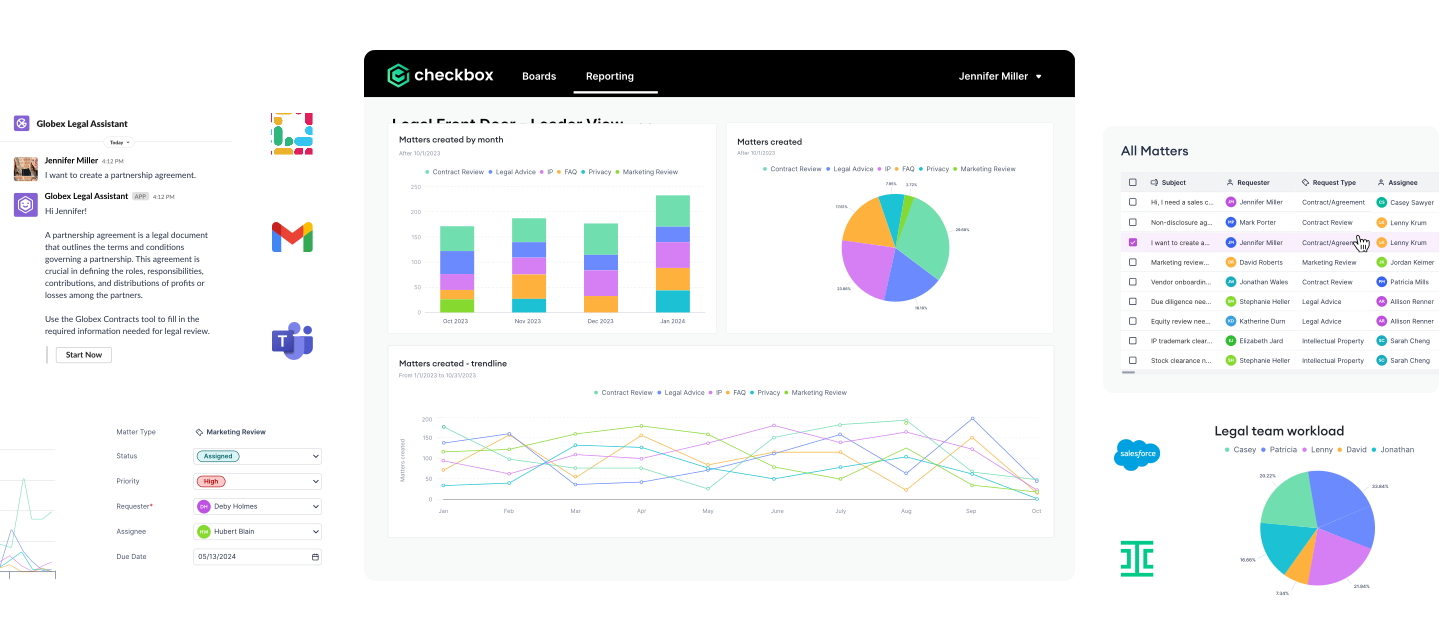
All-in-one legal ops platforms like Checkbox are designed around a single anchor: the legal front door. From the moment a request comes in, intake, workflows, and reporting all run on the same underlying data model, so information flows cleanly through the entire process. This modular, interconnected setup makes it easy to track cycle times and legal spend in one place, without stitching together multiple tools. The legal front door can be deployed directly inside Microsoft Teams, Slack, and email, so business users access legal the way they already work. Configuration is fully no-code, allowing legal ops teams to design and update workflows themselves without needing engineering support.
Matter management platforms like LawVu are built with the matter as the central unit of work. Recent releases have added intake channels in Microsoft Teams, Slack, and email, along with native reporting and dashboards, so the platform now covers all three pillars: intake, matter management, and reporting. Its main focus is still matter tracking and outside counsel spend management, which remains LawVu’s strongest area.
Contract lifecycle management platforms like Ironclad were built around the contract object and have since extended into intake and non-contract workflows through their no-code Workflow Designer, along with Ironclad Insights for reporting. The data model is still contract-anchored, which suits teams whose primary volume is contracts and who want to extend an existing CLM investment rather than adopt a separate platform.
Broader legal intake and workflow tools like Streamline AI were built around the intake experience. Workflow automation, matter management, and analytics sit on top of that intake layer. This makes Steamline a good option for smaller legal teams that mainly need to handle intake volume efficiently right now. For growing teams that want to build scalable, future‑proof processes and introduce more advanced tools over time, other solutions may be a better fit.
Enterprise legal service delivery platforms like ServiceNow Legal Service Delivery bring legal onto the same ServiceNow platform that runs IT, HR, and procurement service delivery. The strength is cross-functional workflow integration and enterprise-grade governance. Configuration typically runs through ServiceNow admins rather than the legal team directly, which fits organizations already standardized on ServiceNow.
Key Features to Evaluate in an All-in-One Legal Platform
The five features that matter most when comparing all-in-one legal platforms are the data model, matter type coverage, deployment channels, configuration model, and analytics scope.
Data Model
Whether legal intake, workflows, and analytics run on the same underlying data or on separate objects stitched together via APIs determines how reporting behaves. Platforms built around a single unified object report in real time. Platforms extended from a contract or matter object often require reconciliation.
Matter Type Coverage
Some platforms handle every request type in a single system. Others were built for a specific object (contract, matter) and extend to other request types via secondary workflows. Teams handling contracts, employment, litigation, policy, and general advice benefit from a platform that treats all request types as first-class.
Deployment Channels
Adoption depends on meeting business users inside tools they’re already comfortable using such as Microsoft Teams, Slack, and email, rather than sending them to a portal. All five leading platforms now support these channels, but with different depth. Some run native two-way conversations inside Teams and Slack; others use the channels only as request entry points.
Configuration Model
No-code, business-user configuration lets legal ops build and update workflows without engineering support. Enterprise platforms like ServiceNow LSD typically require platform admins. All-in-one legal ops platforms and intake specialists tend to be the most legal-ops-configurable out of the box.
Analytics Scope
Legal reporting should cover the full function, not just the pillar the platform was originally built around. Contract-anchored platforms tend to report deeply on contracts and less deeply on non-contract work. Matter-anchored platforms report deeply on matters and outside counsel spend. All-in-one legal ops platforms report across the full function because the data was captured at intake.
Key Takeaways
Every platform in this comparison covers legal intake, workflow automation, and analytics. The real difference is what each one was originally built for, which shapes the data model and the profile of the team that gets the most out of it.
Contract-heavy teams often extend a CLM. Matter-focused teams anchor on matter management. Enterprises standardized on ServiceNow tend to bring legal onto the same platform. Teams whose priority is consolidating intake, workflows, and reporting into a single legal ops system, without engineering dependency, tend to land on all-in-one platforms built around a legal front door.
Checkbox was built as an all-in-one legal ops platform with an AI legal front door at the center, no-code workflow automation across all matter types, and a native analytics layer. That origin makes it a strong fit for legal ops-led teams consolidating multiple point solutions into a single system, particularly where the reporting layer needs to cover the full function rather than one object.
Want to learn more? Book a walkthrough to see how this modular, connected single-system approach behaves against your existing tech stack and legal operations.