If you’ve ever watched a contract approval get stuck in someone’s inbox for a week, or spent an afternoon chasing a colleague just to move a matter forward, you already understand the problem that workflow automation exists to solve.
Legal workflow automation replaces those manual, repetitive steps — routing requests, chasing approvals, triggering next actions — with structured sequences that run reliably on their own. Pair that with cloud infrastructure, and those workflows become both accessible and scalable across your entire organization, from any location, at any time.
Together, they form what’s known as cloud workflow automation for legal and it’s quickly becoming the operational backbone of high-performing legal teams.
Let’s break down why cloud offers a sturdy foundation for legal workflows, which processes benefit most, and how to scale it across your team.
Why Cloud for Legal Workflows?
Legal work has always been document-heavy, approval-driven, and highly collaborative. Yet, for a long time, the tools supporting it were anything but.
On-premise systems locked data behind office walls, and manual processes made it difficult to track who did what, and when. Cloud changes that.
Because it’s hosted and accessed online, cloud infrastructure means your workflows, documents, and data aren’t tied to a single machine or location. Your team can collaborate in real time, stakeholders can action requests without being in the same room, and nothing gets lost in a chain of forwarded emails.

Beyond accessibility, cloud platforms are built to scale. As your legal team takes on more work — more contracts, more requests, more jurisdictions — a cloud environment grows with you, without the overhead of managing physical infrastructure.
And while security is often raised as a concern, modern cloud platforms such as Checkbox are designed to meet enterprise-grade compliance standards, with robust access controls, encryption, and audit trails built in.
Core Processes in the Cloud
Cloud workflow automation for legal is an approach that can be applied across many of the processes your team handles every day. Because everything lives in the cloud, each of these workflows becomes trackable, accessible, and connected across your organization:
The most impactful areas to start include:
- Legal Intake and Triage — instead of requests arriving ad hoc via email or Slack, a cloud-based automated intake process can capture and route each request to the right stakeholder, with the right information, from the start.
- Contract Management — drafting, approvals, and renewals run through a centralized cloud environment, meaning stakeholders can action their steps in real time, from anywhere, without bottlenecks caused by geography or inbox delays.
- Matter Management — task assignments, deadlines, and status updates are managed in one shared cloud environment, so everyone is always working from the same picture.
- Compliance Workflows — policy acknowledgements and approval chains are standardized and stored in the cloud, creating an automatic audit trail that’s accessible whenever you need it.
Benefits of Cloud Workflow Automation
When legal processes move to the cloud and are underpinned by automation, the compounding effect across your team is significant:
| Benefit | What It Means in Practice |
|---|---|
| Speed | Automated routing and approvals eliminate back-and-forth. Contracts get signed faster, requests get resolved sooner. |
| Consistency | Every process follows the same path, every time, leading to fewer errors, fewer exceptions, less time correcting mistakes. |
| Visibility | Real-time insight into where every matter, contract, or request stands, without having to chase anyone for an update. |
| Scalability | As request volumes grow, cloud workflow automation for legal scales with them so you can handle more work without proportional manual effort. |
| Audit Readiness | Every action is logged automatically, giving you a timestamped record of who did what and when, which is invaluable for compliance. |
Challenges to Address
Adopting cloud workflow automation isn’t without its hurdles. The most common ones legal teams encounter are:
- Change Management — lawyers are creatures of habit. Getting buy-in requires demonstrating value early, not just mandating a new system.
- Integration — your cloud workflows need to connect with existing tools across the business. Choosing a platform with strong integration capabilities matters.
- Data Migration — moving legacy contracts and documents into a new environment takes planning, but it’s a one-time cost that pays for itself quickly.
Modernization at Scale
Scaling legal operations doesn’t mean hiring more lawyers. It means building processes that can handle greater volume without breaking down. Cloud workflow automation makes that possible by allowing legal teams to standardize how work gets done, then replicate that across business units, geographies, and growing request volumes.
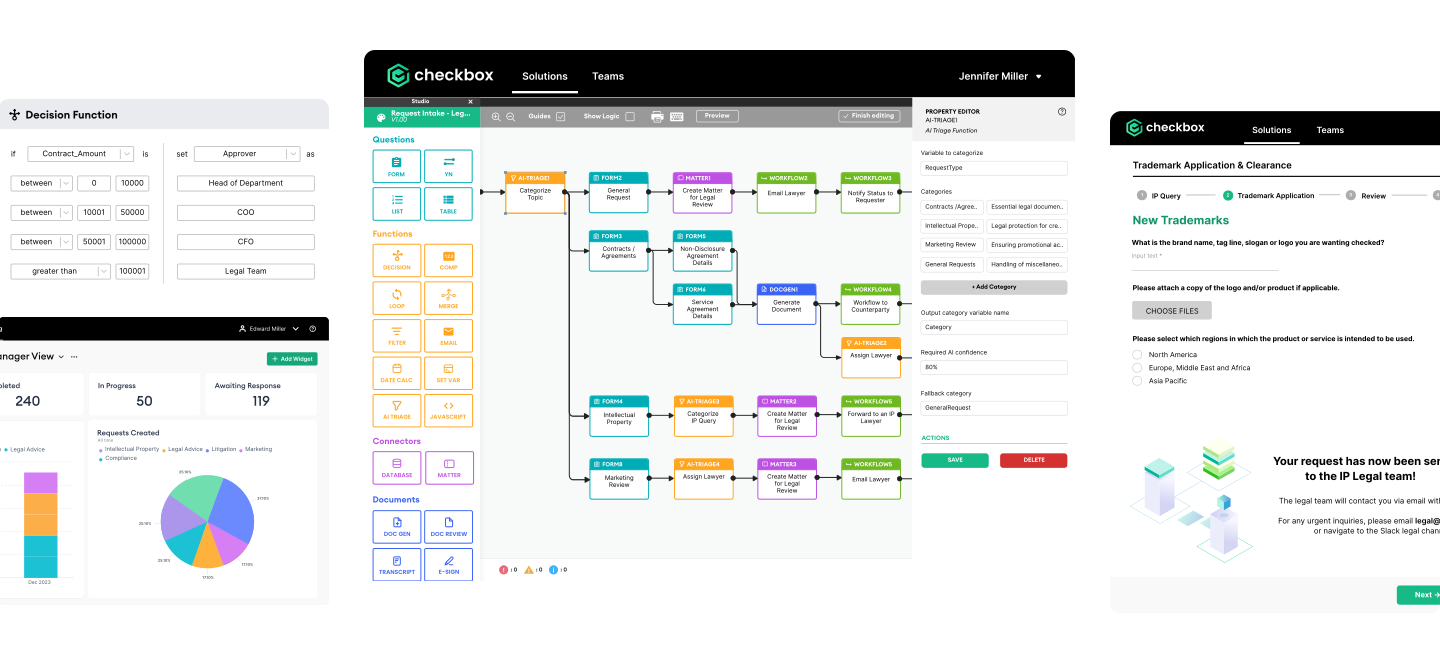
The key is to start small. Identify your highest-volume, most repetitive workflows first, automate those, then expand. With a no-code workflow automation software like Checkbox, legal teams can build and iterate on workflows themselves — no IT resources required — making it practical to scale at your own pace.
Key Takeaways
Cloud workflow automation is a present-day advantage for in-house legal professionals that compounds over time. The legal teams pulling ahead aren’t necessarily the largest or best-resourced. They’re the ones that have standardized how work gets done and built a foundation that scales with the business. The best time to start is with one high-volume process, prove the value, and grow from there.
If you’re curious about what this looks like for your team, book a demo to see how Checkbox makes it easy to build and automate legal workflows without writing a single line of code.