

Legal teams often answer the same questions repeatedly—for example, when sales can offer a limitation-of-liability cap without legal review. The guidance may be accurate, but it is often rewritten from scratch, buried in email, and unavailable to the next lawyer who needs it. Across recurring questions, this creates significant wasted senior-lawyer time.
A legal playbook turns existing guidance into a reusable, accessible resource, so your team can stop recreating answers it has already developed. Here’s how to build one from the material you already have.
What a Legal Playbook Covers for an In-House Team
A legal playbook is a set of pre-approved answers and decision rules for the questions that recur. It sets out pre-approved answers, decision rules, and escalation points so teams can handle routine issues consistently.
Traditionally, playbooks are used in contract negotiations, covering fallback positions, approved clause alternatives, and non-negotiable walk-away points. For in-house legal teams, however, the scope is much broader. A playbook can cover NDAs, marketing approvals, data-processing requests, procurement thresholds, public statements, and any other recurring situation where the legal guidance remains largely the same, even if the person asking changes.
To test for whether something belongs in a playbook, ask whether two lawyers on your team would reach materially the same answer. If they would, the answer is likely a rule, and rules can be documented and applied consistently. If lawyers would generally disagree, the issue requires live legal judgment and should remain with a human. Most teams find that, once they apply this test, a larger share of inbound work is rule-based than they expected.
How to Identify Your Most Common Legal Requests
Don’t start by guessing what people are likely to ask. Start with the evidence: the questions your team assumes come up repeatedly often differ from the ones that actually do.
1. Review Your Sent Emails and Chat History
Ask each lawyer to spend 20 minutes reviewing outbound emails and chat messages from the past 60 days. Have them flag questions they have answered repeatedly or topics they recall addressing before. These real-world responses will quickly reveal the best candidates for reusable content and provide a strong starting point for drafting it.
2. Pull Your Intake Records
If requests come through a structured legal intake channel, much of the data is already organized. In-house teams with a legal front door can categorize legal requests by type, identify recurring issues, and quantify demand, turning playbook scoping into an evidence-based process.
3. Ask the Business What They Hold Back
Some questions never make it to legal because people from other areas of the business have stopped asking or don’t want to bother the legal team. Avoiding legal can expose the business to significant risk. Ask employees, “What do you wish you could get an instant answer to?” Their responses may uncover unmet legal needs that would otherwise never reach your inbox.
How to Convert Answers Into Thresholds
A legal playbook entry is a decision rule. A useful way to write one is to borrow from triage: for each recurring question, define three zones.
1. Matters that don’t require legal review: Define the specific circumstances in which the business may proceed independently. Use concrete criteria such as dollar thresholds, approved templates, and counterparty categories. For example: “You may sign the standard mutual NDA with any non-competitor counterparty without legal review.” Avoid vague guidance such as “Low-risk NDAs do not require review,” which leaves the business to make a legal judgment rather than follow a clear rule.
2. Matters that always require legal review. These are non-negotiable issues that always require legal review, regardless of context, such as non-standard indemnities, terms involving regulated data, exclusivity provisions, and publicity rights. Documenting these rules protects you as self-service expands, ensuring the system follows clear legal boundaries rather than making case-by-case judgments.
3. Legal requests that should be routed to the appropriate lawyer. This includes anything that falls between the defined zones or requires routing instructions. The playbook’s role is not to provide an answer, but to ensure the question reaches the right person with the relevant context attached. Matters that require legal judgment should always be routed to a lawyer.
Who Owns the Playbook and When It Gets Reviewed
Without clear ownership, playbooks can become outdated and go unnoticed. Laws change, company risk tolerance shifts, and approved answers can stop being reliable. Assign every entry a named owner and a review date. Review each entry every six months by default, and more often if it relates to fast-changing regulations.
Reviews should be simple: confirm the thresholds are still appropriate, check whether exceptions are becoming common, and retire entries that are no longer used. The exception log is the clearest way to spot issues that need attention. When a lawyer overrides a playbook answer, it may signal unclear guidance or an emerging pattern. If the same entry is overridden three times in a quarter, review and update the rule.
Where to Store Your Legal Playbook
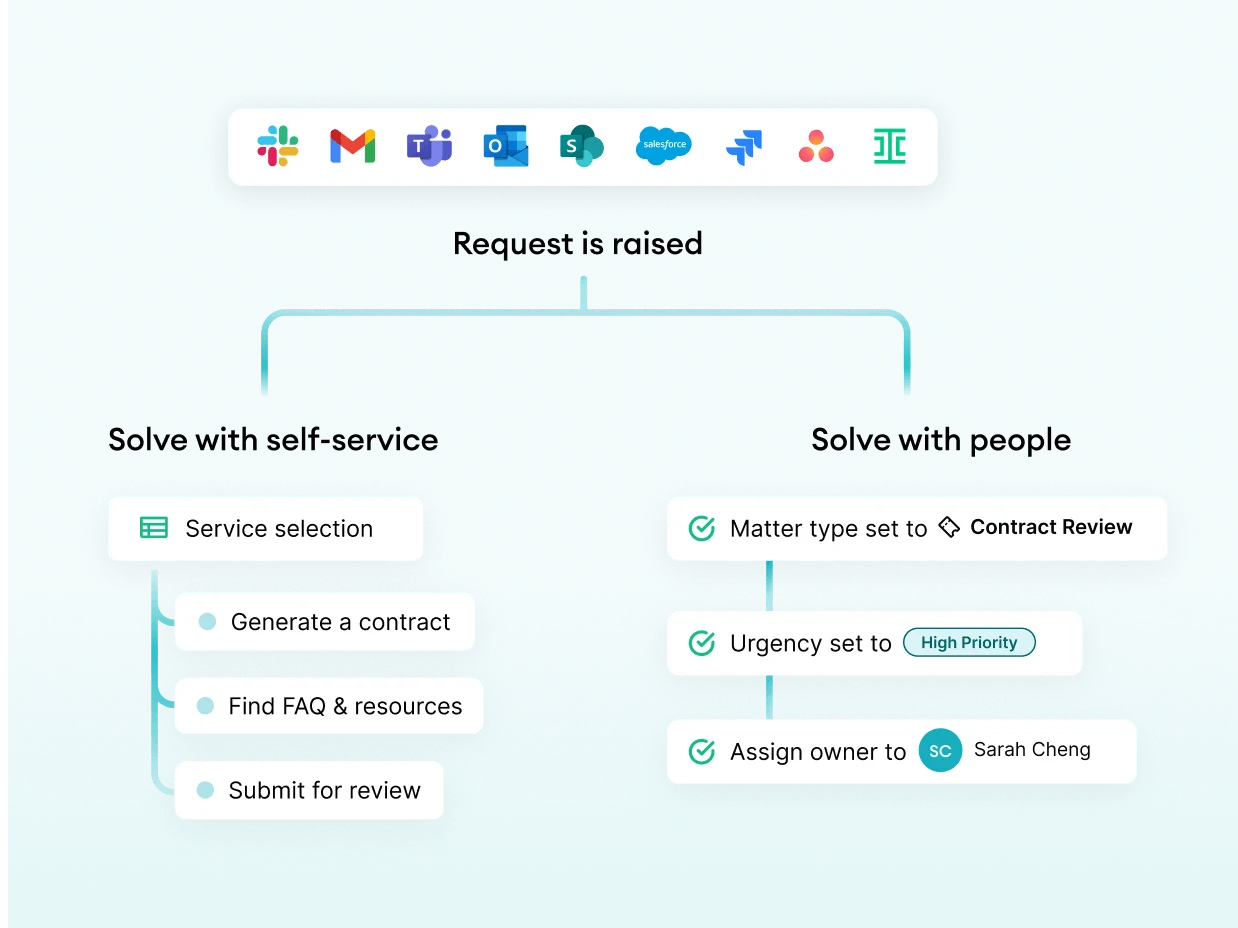
A PDF playbook is usually only consulted by lawyers who already know what they are looking for. But the business asks its real questions in the tools it uses every day such as Slack, Microsoft Teams, and email. A playbook creates real value when it can deliver answers to those questions directly in those channels—right when they arise and without requiring anyone to search through a wiki.
This is where your legal playbook and legal request intake process work as one. For example, Checkbox’s AI Legal Front Door can use the playbook to guide each request as it comes in. It answers routine questions straight away with approved guidance, sends sensitive or complex questions to the right person with the details they need, and records every request, whether it’s answered or passed on. This all happens before a formal matter is opened and over time, the record shows which questions keep coming up, helping you improve the playbook.
Key Takeaways
Your team has already created most of its playbook—it’s just buried in sent emails and chat threads. Find the questions that keep coming up, then turn the answers into clear guidance: what’s always acceptable, what’s never acceptable, and what needs legal review. Assign an owner and review date to each answer, and publish the guidance in the channels your team already uses. The playbook gets stronger with every resolved question: each one confirms an existing rule or helps improve it. Book a demo today to see how Checkbox turns your playbook into instant answers and smarter routing from the moment a request comes in.
Frequently asked questions
Legal Playbook FAQs
What is a legal playbook?
A legal playbook is a set of pre-approved answers, fallback positions, and decision rules for the legal questions that recur in a company. It lets the business resolve routine questions instantly while routing genuine judgment calls to a lawyer.
How do I identify which questions belong in a legal playbook?
Mine your sent folders, chat history, and intake records for questions your team has answered more than twice, then rank them by frequency and the seniority of the time they consume. If two of your lawyers would give the same answer, it belongs in the playbook.
What format should legal playbook entries use?
One page per question, split into three zones: conditions where the business can proceed alone, hard stops that always need a lawyer, and routing rules for everything in between. Concrete thresholds beat general guidance.
How often should a legal playbook be reviewed?
Every entry needs a named owner and a review date, with six months as a sound default and faster cycles for regulated areas. Review any entry immediately after lawyers override it repeatedly.
How is a legal playbook different from a legal front door?
The playbook is the content: the rules and pre-approved answers. A legal front door is the delivery system that applies those rules at intake, answering routine questions through self-service and routing the rest.
Can AI write a legal playbook automatically?
AI can draft entries from your past answers and flag recurring questions, but the thresholds themselves are risk decisions only your lawyers can approve. Treat AI as the analyst, your team as the editor of record.